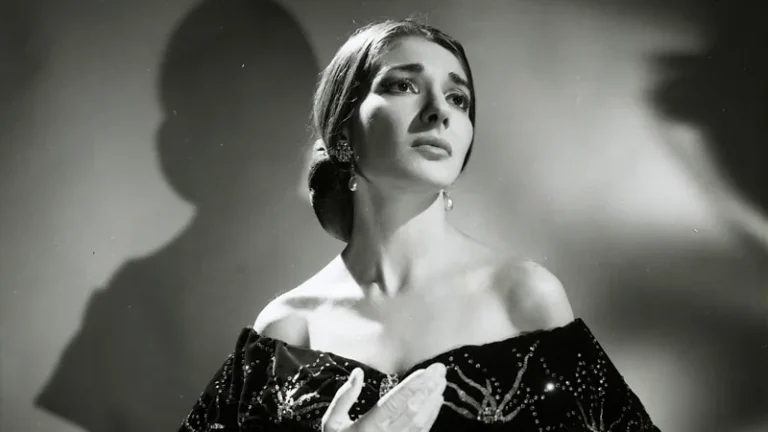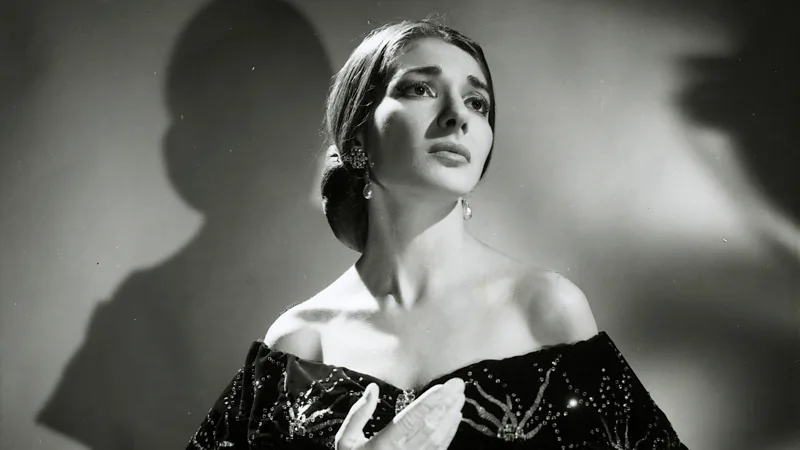
Maria Callas is universally celebrated as one of the greatest opera singers of the 20th century—a mesmerizing and intensely dramatic soprano whose voice and artistry transformed opera forever. Known affectionately as La Divina (The Divine One), Callas combined extraordinary vocal versatility with powerful emotional expression, redefining operatic performance and bringing bel canto repertoire back into the international spotlight.
This deep-dive Maria Callas biography explores her early years, meteoric rise, signature roles, personal struggles, relationships, later life, legacy, and frequently asked questions—making it a 100% SEO-optimized resource for opera lovers, students, researchers, and curious readers alike.
Early Life and Background
Maria Callas was born Maria Anna Cecilia Sophia Kalogeropoulou on December 2, 1923, in New York City, U.S. to Greek immigrant parents. Her father, George Kalogeropoulos, and mother, Evangelia Dimitriadou, later adopted the surname Callas for easier pronunciation.
From a young age, Maria displayed a remarkable musical talent. However, her home life was fraught with tension and competition with her older sister, which shaped her complex emotional world and later influenced her art. In her teenage years, she moved with her mother and sister to Athens, Greece, where she enrolled at the prestigious Athens Conservatoire to study voice, ultimately under the tutelage of celebrated soprano Elvira de Hidalgo.
Early Singing Career and Professional Debut
Callas made her professional opera debut in 1941 as Tosca with the Royal Opera of Athens, quickly gaining local acclaim for her dramatic presence and vocal intensity. Her early repertoire included important roles in works like Cavalleria rusticana, Boccaccio, and Fidelio, showcasing her versatility right from the start.
Rise to International Stardom
After World War II, Maria Callas moved back to the United States briefly before establishing her international career in Italy. In August 1947, she made a striking impression with her performance in La Gioconda at the Verona Arena, earning critical attention that propelled her onto Europe’s leading stages.
Callas’s breakthrough continued in the early 1950s:
-
1950: Debuted at the prestigious La Scala in Milan, one of the world’s most renowned opera houses.
-
Throughout the decade, she performed across major opera venues such as Royal Opera House London, Metropolitan Opera New York, and Paris Opera.
Her extraordinary command of both dramatic and bel canto roles helped revive neglected operatic repertoire and drew global admiration.
Signature Roles and Operatic Artistry
Maria Callas’s voice and stagecraft were uniquely suited to emotionally intense and technically demanding roles. Among her most iconic performances:
-
Norma (Vincenzo Bellini) — one of her defining interpretations.
-
Tosca (Giacomo Puccini) — showcased her dramatic power.
-
La Traviata (Giuseppe Verdi) — a masterpiece of lyrical and emotional nuance.
-
Lucia di Lammermoor (Gaetano Donizetti) — illustrated her coloratura agility.
Her ability to merge vocal skill with psychological depth made each character intensely human, drawing audiences into the dramatic arc of each story.
Voice, Technique and Artistic Style
Callas possessed an extraordinary instrument—a dramatic soprano capable of navigating both lyrical and coloratura passages with flair and precision. Her wide vocal range and expressive phrasing distinguished her from her peers, making her recordings and live performances enduring treasures.
Critics and audiences alike praised not just her vocal excellence but her dramatic interpretation—she did not merely sing her roles; she embodied them, transforming opera into living theatre.
Personal Life, Marriage & Relationships
In 1949, Maria Callas married Giovanni Battista Meneghini, a wealthy Italian industrialist who became her manager. Their relationship lasted until the late 1950s.
In 1959, Callas’s life took a dramatic turn when she began a passionate, high-profile relationship with Greek shipping magnate Aristotle Onassis. Although deeply devoted to each other, the liaison ended in 1968 when Onassis married Jacqueline Kennedy, a personal heartbreak that profoundly affected Callas.
Her private life—marked by love, loss, intensity, and media attention—added a layer of mythic tragedy to her public persona.
Mid-Career Challenges and Vocal Issues
By the late 1950s, Callas began experiencing vocal difficulties, particularly in her upper register. Some observers attribute these issues to the dramatic weight loss she undertook following public criticism and body-image pressure—an experience that reflects the intense aesthetic demands placed on opera stars.
Despite these challenges, Callas continued to perform, although with less frequency, and eventually scaled back her stage appearances in the early 1960s.
Later Career, Teaching & Final Performances
Even as her operatic stage presence diminished, Maria Callas remained engaged with music:
-
She taught master classes at the Juilliard School in the early 1970s, sharing her insights with a new generation of singers.
-
Her last major operatic performance was Tosca at Covent Garden in London in 1965.
She also appeared in film and documentary projects, such as Medea (1969), although her film career met with mixed success.
Death and Posthumous Recognition
Maria Callas died unexpectedly on September 16, 1977, at the age of 53 in Paris, France, from a heart attack.
Her legacy grew steadily after her death:
-
She was awarded a Grammy Lifetime Achievement Award posthumously.
-
Her life inspired documentaries like Maria by Callas (2017) and biographical films like Maria (2024), starring Angelina Jolie, which recounts her life and decline.
-
A dedicated Maria Callas Museum opened in Athens, Greece, celebrating her life and art.
Legacy and Influence
Maria Callas left an indelible mark on opera and classical music. She:
-
Revitalized bel canto opera and brought neglected repertoire back into mainstream performance.
-
Set new standards for dramatic and emotional expression in operatic singing.
-
Inspired countless singers, directors, and composers in the decades that followed.
Her recordings remain bestsellers and study materials for vocal students worldwide. Her influence extends into popular culture, film, theatre, and scholarship, confirming her place as La Divina in every sense.
Frequently Asked Questions (FAQs)
Q1: When and where was Maria Callas born?
Maria Callas was born on December 2, 1923 in New York City, USA.
Q2: What made her voice unique?
Her voice spanned both dramatic and coloratura styles, allowing her to perform a wide range of roles with intense emotional depth.
Q3: Who was Aristotle Onassis?
He was a Greek shipping magnate with whom Callas had a long, passionate relationship.
Q4: What was her final opera role?
Her last major stage performance was Tosca at Covent Garden in 1965.
Q5: Where can I learn more about her life today?
Visit the Maria Callas Museum in Athens, dedicated to her life and legacy.
Conclusion
Maria Callas was not just an opera singer—she was a cultural and artistic force whose voice, presence, and dramatic flair transformed the art form forever. From her early struggles and meteoric rise to her personal heartbreaks and enduring legacy, Callas lived a life of passion, intensity, and brilliance. Her story remains a beacon for artists and audiences alike, reaffirming that true genius transcends time.
About the Author